You’ve Seen the Highlight Reels. Now Here’s the Full Picture
You’re planning a destination wedding in Mexico and the entertainment question is already in the back of your mind: What can we actually do here? What’s worth adding? Where do we start? That’s exactly the right question to be asking at this stage, and it deserves a real answer – not a generic listicle of things that look great in photos but are miserable to coordinate from another country.
This article walks through the entertainment formats and add-ons couples are actually using for destination weddings in Cancún, the Riviera Maya, Playa del Carmen, and Tulum; what each moment calls for, what the Yucatán Peninsula context changes about your choices, and how to build a program that feels intentional rather than assembled from a menu.
Why Entertainment Decisions Are Different Here Than Back Home
Planning entertainment for a destination wedding in Mexico isn’t harder than planning at home – but it is different, and the differences matter before you start building your wishlist.
The venue shapes everything. Yucatán Peninsula wedding venues are rarely one-room affairs. A typical property might have a beachfront ceremony space, a cenote or garden cocktail area, and a covered terrace or indoor ballroom for the reception – each with its own acoustic profile. Open-air beachfront spaces eat low-end sound and require more powerful speaker coverage. Covered terraces can bounce sound unpredictably. What worked at your friend’s downtown loft wedding will not automatically translate to a palapa-roofed space in Tulum.
SEMARNAT environmental regulations create real curfews. On protected beach zones – which covers most of the Riviera Maya coast – amplified music at the beachfront typically has to wrap between 10 and 11 PM. This isn’t a rumor or a hotel policy you can negotiate around; it’s federal environmental law protecting sea turtle nesting grounds. Couples who don’t know this build timelines that collapse at 10:15 PM. The fix is designing your entertainment sequence backward from the cutoff: know when the last song plays, then build your program from ceremony forward.
Resort preferred vendor lists are real. Many all-inclusive and boutique hotels maintain lists of pre-approved entertainment vendors, and bringing in outside acts can mean venue surcharges, additional insurance requirements, or flat-out refusals depending on the contract. This affects everything from which DJ you can hire to whether a fire dancer troupe can perform on the grounds. If you have a specific act in mind, verify vendor access before you get attached to it. Check whether the resort DJ is the right fit or an outside provider makes more sense →
Guest diversity is a programming challenge most US couples underestimate. A destination wedding in Mexico commonly draws guests from multiple countries, multiple generations, and multiple musical tastes – all in the same room. A reception playlist that’s perfect for your college friends will lose your parents and your partner’s Mexican relatives on the dance floor within the first hour. This isn’t a problem you solve with a longer playlist; it’s a problem you solve with a DJ or MC who knows how to read a room with that kind of range.
Dream Version vs. What Actually Goes Wrong
What a well-designed destination wedding entertainment program looks like:
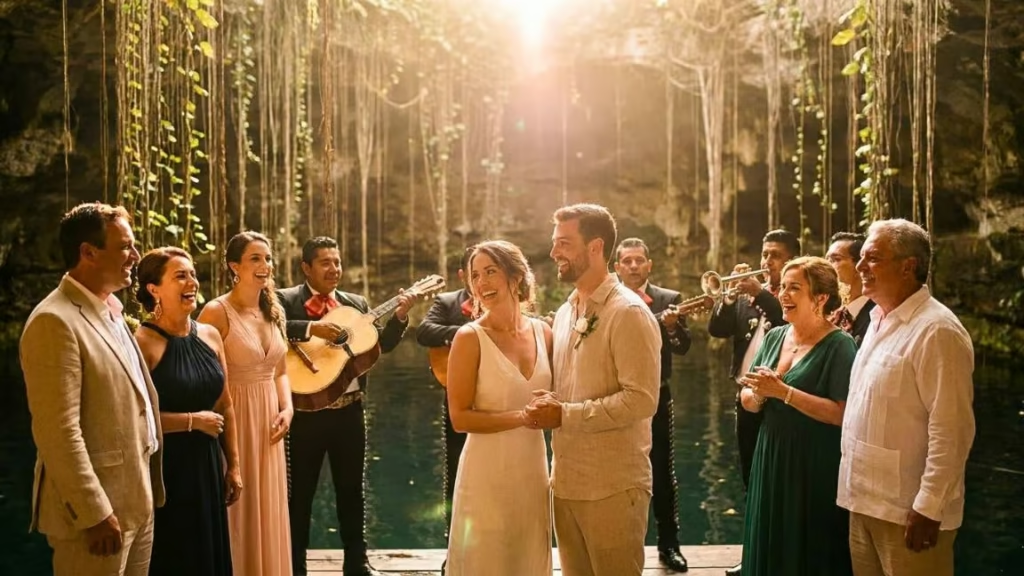
The ceremony opens with a live string trio -violin, viola, and cello- playing a song the couple chose when they submitted their music preferences during the planning process. Guests arriving at cocktail hour are welcomed by a marimba duo playing regional Mexican music that feels genuinely local, not tourist-trap.
As cocktail hour closes and dinner begins, the mood shifts: a solo musician, a vocalist with a guitar, or a saxophonist playing over a backing track, sets an intimate tone through dinner, the room building energy naturally before the full production takes over.
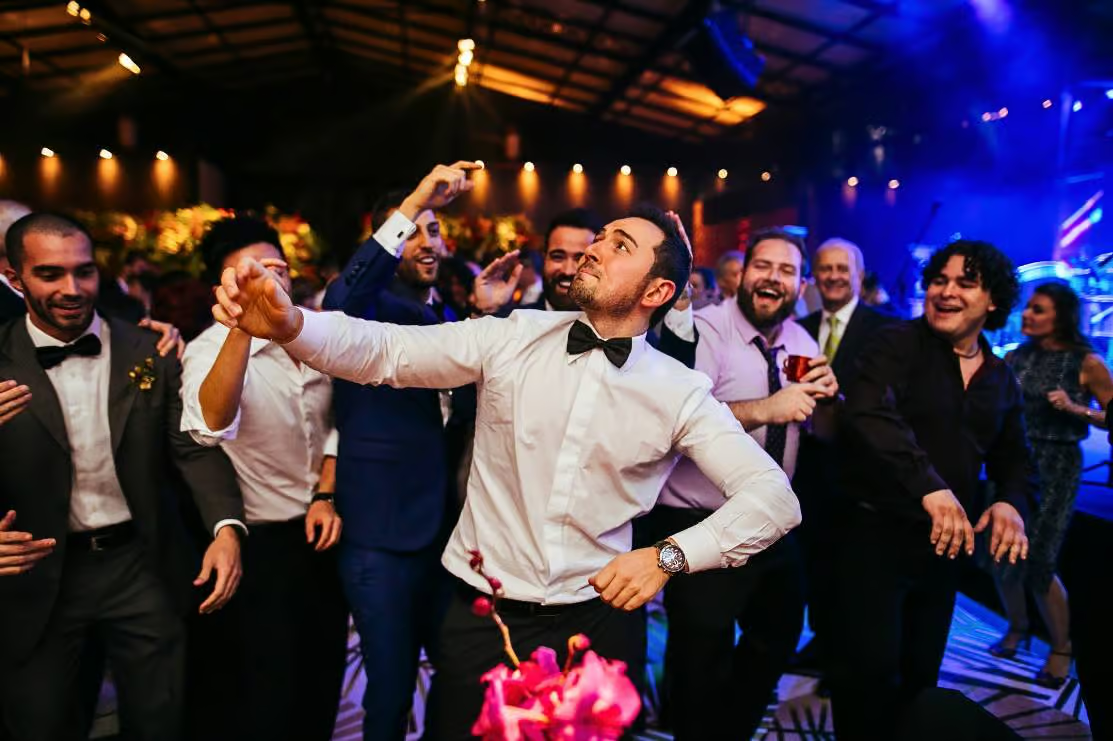
Then the DJ takes over and the dance floor does what a good dance floor should; it doesn’t empty. The MC, fluent in both English and Spanish, keeps the family of the groom connected to every toast. The whole program wraps five minutes before the beach curfew, and the couple knew exactly when that was from the first planning call.
What goes wrong when entertainment is treated as a line item:
The DJ shows up without a sound engineer and spends 45 minutes troubleshooting feedback during cocktail hour. The fire dancer performance – booked directly without checking resort policy – gets turned away at the gate the morning of the wedding. Nobody told the marimba trio the ceremony was running 20 minutes late, so they packed up before the couple exited to the cocktail area. The reception runs past the beach curfew and the resort cuts power to the sound system mid-song. None of these are hypothetical; they’re the scenarios couples describe when they post wedding horror stories in destination wedding forums.
A Practical Framework for Building Your Entertainment Program
The most useful way to think about destination wedding entertainment is by moment, not by vendor category. Each moment in your event has its own emotional job, and the right format for that moment depends on what you’re trying to make guests feel — not what’s most visually impressive in photos.
1. Ceremony (30–60 min)
Live acoustic always outperforms a playlist here. The question isn’t whether to have live music — it’s what instrumentation fits your setting and your sound. A string duo works beautifully in intimate garden or chapel settings. A solo guitarist or acoustic vocalist feels right for smaller beachfront ceremonies. For larger ceremonies in open-air amphitheater-style spaces, a trio with light sound reinforcement gives you coverage without overpowering the moment.
2. Cocktail Hour (60–90 min)
This is the moment most couples underinvest in. Cocktail hour is when guests decompress from the ceremony, start talking, and form their first impression of whether this event has energy. A live act during cocktail hour: a marimba duo, a jazz trio, a Latin acoustic band, sets the tone for the rest of the night far more effectively than background Spotify. It’s also the right moment for a cultural element if you want one: a Mayan folkloric dancer or a batucada ensemble, a traditional trio playing son jarocho or trova yucateca. Sourced through a local entertainment company familiar with these artists, these are genuinely memorable; sourced from a photo-album tour package, they can feel performative.
3. Dinner (60–90 min)
Live or DJ, lower energy than the reception, longer attention spans. A vocalist with a band: whether pop, jazz, or Latin standards, works very well through dinner and creates a natural bridge to the higher-energy reception. If your budget is concentrating DJ resources on the reception, dinner can run on a curated playlist with good house sound, as long as someone is monitoring levels.
4. Reception / Dance Floor (2–4 hrs)
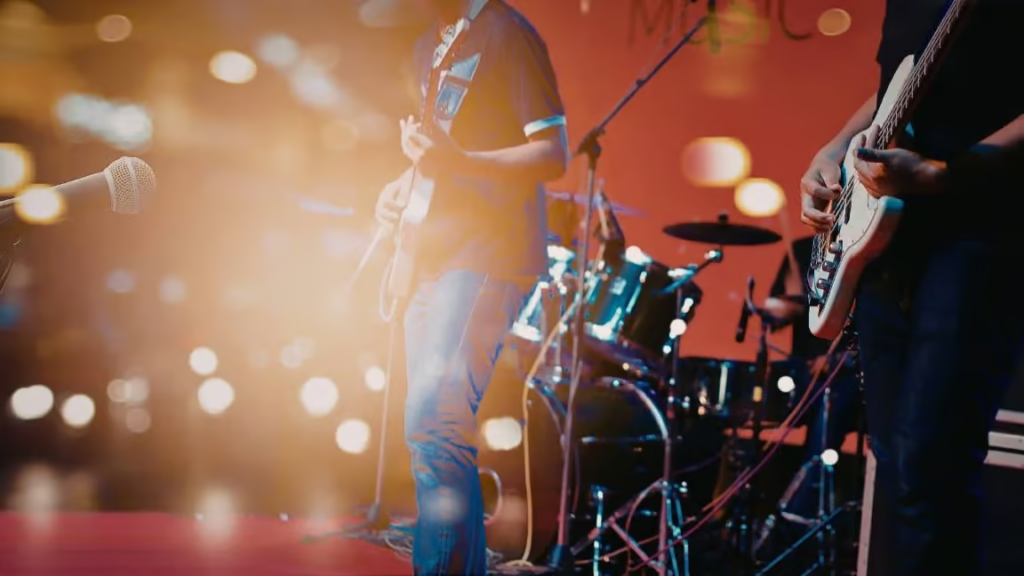
This is where your entertainment choice makes or breaks the dance floor — and for destination weddings in Mexico, a live band is worth serious consideration here, not just as an upgrade but as the main event. A band that covers multiple genres and reads the room in real time does something a DJ technically cannot: it responds to the energy in front of it. When the floor starts thinning, a live band pulls it back through performance, not just song selection. For a guest list that spans cultures and generations — which describes almost every destination wedding in the Yucatán — that flexibility is worth more than any playlist. Check how a wedding live music in Cancún looks like→
The sequence that actually works in Cancún (and what Gaia recommends) isn’t band-first. It’s DJ, then band, then DJ again.
The DJ handles first dance, parent dances, and dinner coverage, where exact-song precision matters most and slow tempos don’t justify opening a live set. The band comes on once the floor is warm and guests are ready to be swept into a performance, that’s when a live band lands hardest.
After each band set, the DJ returns with upbeat tracks the band’s setlist doesn’t cover: genre pivots, crowd requests, tempo acceleration. The band creates the emotional and energy anchor; the DJ sustains the floor through the curfew window and fills the gaps no rehearsed setlist can pre-program.
If budget requires choosing one, a bilingual DJ with genuine MC ability and a crowd-reading repertoire remains a strong option, but the ceiling on a live band night is higher, and guests remember it differently. For a deeper look at how these two options compare on cost and event fit, see the live band vs. DJ cost breakdown for Cancún weddings →
What a production-level DJ actually delivers
The distinction that matters for a destination wedding isn’t the DJ’s music taste or setlist, it’s what they bring to the room beyond the music. A production-level DJ operates more like a creative director: building live-mixed transitions rather than queuing a playlist, reading the room’s energy in real time to decide when to accelerate and when to pull back.
Three elements separate a production set from a performance set:
- CO2 cannons and cold spark fountains deployed at specific musical moments — first dance entrance, a midnight pivot, the final song. These function as visual punctuation on the DJ’s energy arc, not novelty additions.
- Silent disco, particularly relevant at beachfront venues approaching the SEMARNAT curfew. When amplified sound at the beach wraps at 10:30 PM, a silent disco doesn’t end the party — it relocates it. Guests continue dancing on individual headsets while the beach stays quiet. The visual of a full dance floor moving in near-silence is genuinely memorable and solves a real logistical constraint at the same time.
- DJ + live instrument, a saxophonist or percussionist playing alongside the DJ gives the set a live, concert quality that no playlist replicates. The DJ keeps the range and versatility of a full music library; the live element adds presence and unpredictability.
One practical note on production logistics: most professional DJ companies in Cancún operate their own lighting rigs in-house. Bundling audio and lighting through a single provider produces a more cohesive result; light cues that actually respond to musical moments rather than running on a separate timer, and eliminates a vendor coordination layer from your production day.
5. Signature Moments: The Transition That Makes or Breaks the Night
The most effective entertainment add-on at a Cancún reception isn’t the most visually spectacular one. It’s the one placed at the night’s highest-risk transition: the gap between the last course clearing and the dance floor opening.
This is the moment when half the room considers leaving and the other half hasn’t quite shifted into party mode. A well-placed live show performs a specific function here, it physically moves guests toward the music without the DJ having to fight the room’s inertia, and without an awkward announcement breaking the mood. Get this transition right and the dance floor opens full. Miss it and you spend the first hour pulling guests back from the bar.
The formats with the deepest roots in this market
A Mariachi set at the tables (15–20 minutes)
Mariachi moves through the room rather than performing from a stage. That distinction matters: a stage-level performance invites watching; a roving Mariachi set invites participation. Guests at every table get a moment, conversations restart, energy builds — and by the time the DJ opens, the room is already warm. It’s the most organically requested format among couples planning receptions in the Riviera Maya, and the one with the highest guest satisfaction across diverse age groups and nationalities.
A Batucada show (20–30 minutes)
Brazilian percussion with dancers is crowd-interactive by design. The performers don’t stay on a stage, they move into the space and pull passive observers into the energy. It’s loud enough to signal the transition without amplification requirements, it reads across every culture in the room simultaneously, and it creates the specific sensory shift that tells guests: the party is starting now. The format has a long operational track record in the Cancún corridor and logistics are well understood by local venues.
A Fire show (20–30 minutes)
Fire performance is the one visual spectacular with genuinely organic demand in this market. Couples and guests actively search for it, reference it in planning forums, and remember it years later. For an outdoor beach or terrace reception, the visual contrast against a dark sky is unmatched by any indoor-compatible format. The relevant logistics (SEMARNAT compliance for beachfront venues, open flame resort approvals, safety perimeter setup, coordination with the lighting operator) are handled as part of professional production. This is not a format to source independently or add at the last minute.
A saxophonist over DJ backing tracks
Growing organically in demand, low in production friction. A sax player needs no special permits, no stage infrastructure, and no power considerations beyond a single monitor. The format works for the transition gap because it’s neither fully live music nor DJ. It occupies the in-between perfectly, keeping the acoustic intimacy of dinner while signaling movement toward dance. It also delivers the “live music moment” at a fraction of a full band’s footprint.
Premium upgrades for couples who want something beyond the standard
For receptions where the couple specifically wants a visual spectacular above the entertainment formats above, large-scale lighting effects, aerial elements, or fully custom theatrical production, the conversation starts with your venue’s technical specifications and fire/safety approval timeline. These formats aren’t impossible in this market, but they require significantly more production lead time and venue pre-authorization than the formats above.
The scheduling principle that makes any of these land
Position the show at the precise transition between the final course and the dance floor opening not 10 minutes after dinner ends, not before dessert is cleared. The show acts as a physical magnet, drawing guests out of their chairs and toward the music without a hard cut or an announcement. Get the timing right and the floor opens naturally. The logistics that make this possible (resort approvals, performer-to-lighting-operator synchronization, safety clearances) are coordinated by the entertainment team as part of production. These are moments you’re meant to be inside, not managing from the perimeter.
When Your Wedding Is More Than One Night ( Or More Than One Tradition)
Some destination weddings don’t fit the single-evening format, and the entertainment program needs to reflect that.
Welcome parties and multi-day celebrations: Couples whose guests are flying in from across the country or across multiple countries, increasingly treat the night before the wedding as its own event. A welcome dinner on the beach or a resort deck is the natural moment for a fire show: the visual impact is immediate, the setting is already dramatic, and it sets an unmistakable tone for the celebration ahead.
A professionally produced fire show on a beachfront or open deck runs 20–45 minutes and works as the standalone centerpiece of the night, no additional entertainment needed to fill the room. If your venue is in Cancún or along the Riviera Maya, fire shows for beach resort weddings and pre-Hispanic fire and dance productions are two distinct formats worth understanding before you decide which fits your event.
Cultural and fusion weddings: Destination weddings in the Yucatán Peninsula draw couples from across the world, and a meaningful portion of them are planning ceremonies that honor specific cultural traditions: South Asian, Middle Eastern, and fusion celebrations among them.
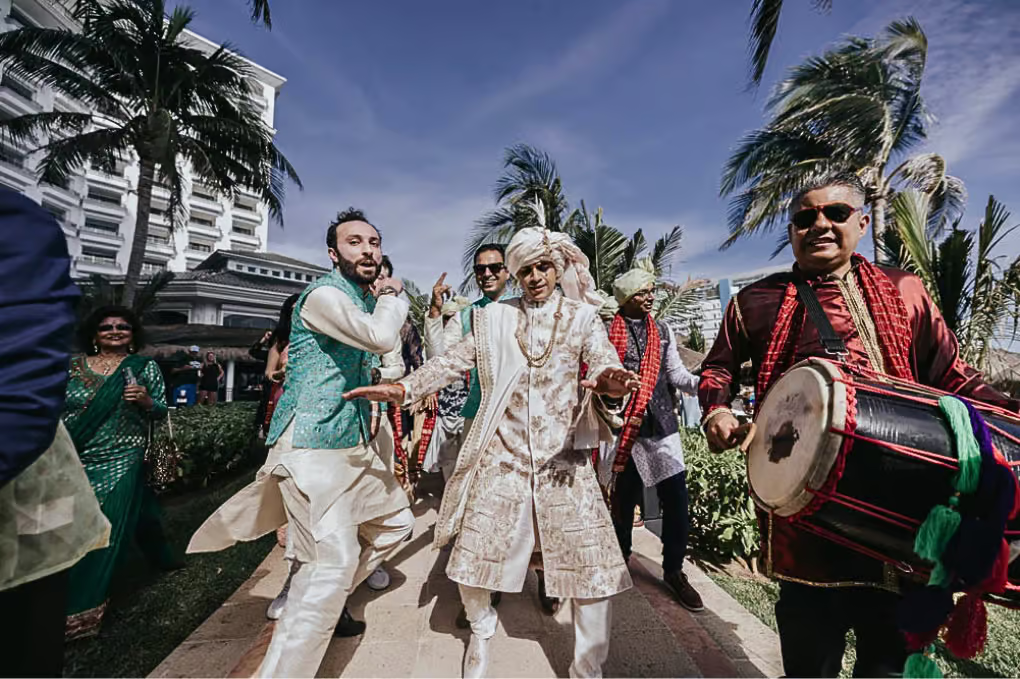
The entertainment expectations for these events are different: a belly dancer and a tabla or dhol drummer aren’t add-ons, they’re structural elements of the celebration. At Gaia Live Music, we build custom entertainment programs around your cultural background and ceremony format rather than offering a fixed menu. The starting point is your traditions, not ours.
How Professionals Build This Program (and How Gaia Live Music Can Help)
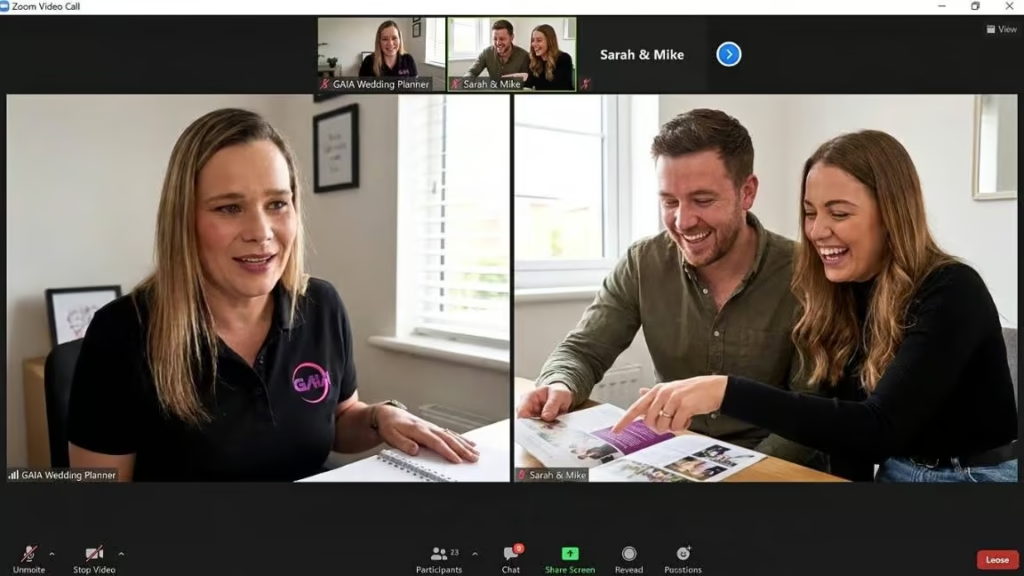
When an entertainment company with experience in the Yucatán Peninsula takes on a destination wedding, the first conversation isn’t “what acts do you want?” It’s “what do you want guests to feel at each moment, and what are the constraints at your venue?” That sequencing matters, because the constraints — acoustic profiles, vendor access policies, curfew timing — determine which formats are viable before aesthetics enter the picture.
At Gaia Live Music, we produce entertainment programs for weddings across Cancún, the Riviera Maya, Playa del Carmen, Tulum, and Isla Mujeres. We handle venue coordination on sound and vendor access as part of the planning process, and our roster covers everything from live bands and acoustic trios to DJs, cultural acts, and specialty performers. If you’re building a wishlist and want to know what’s feasible at your specific venue and date, our team can walk you through it. Explore live music and entertainment options for your wedding →
FAQs
Can I bring my own DJ or band to a resort wedding in Mexico?
It depends on the resort. Many properties in Cancún and the Riviera Maya maintain preferred vendor lists, and bringing in outside entertainment can trigger surcharges, additional insurance requirements, or outright restrictions depending on your venue contract. The safest approach is to confirm vendor access policies with your resort coordinator before committing to any act — ideally before you sign the wedding package.
How early should I book entertainment for a destination wedding in Mexico?
For peak season dates — December through April — booking 10 to 12 months in advance is strongly recommended for live acts and specialty performers. DJ availability tends to be more flexible, but the best bilingual MCs with destination wedding experience book out quickly. If your date falls during a holiday week (Christmas, New Year’s, Easter), treat it as peak season regardless of the month.
What time does music have to stop at a beach wedding in Mexico?
On federally protected beach zones along the Riviera Maya and parts of Cancún, amplified music at the beachfront typically must end between 10 and 11 PM under SEMARNAT environmental regulations protecting sea turtle nesting areas. The exact curfew varies by property and zone — your entertainment company should confirm this with the venue as part of the planning process, not the night of the event.
Do I need a bilingual MC for my destination wedding in Mexico?
If your guest list includes Spanish-speaking family members — which is common for weddings in Mexico — a bilingual MC makes a measurable difference in how connected those guests feel throughout the reception. Toasts, game moments, and transitions that land in one language and land flat in the other create an invisible divide on the dance floor. A bilingual MC isn’t a luxury for a mixed guest list; it’s a functional requirement.
What’s the difference between a fire show and a pre-Hispanic fire and dance show?
A fire show typically features trained performers using fire props — poi, staffs, fans — in a choreographed performance set to music. A pre-Hispanic fire and dance show incorporates traditional Mayan cultural elements: ceremonial symbolism, indigenous costuming, and storytelling rooted in the region’s heritage. Both work well as standalone centerpieces for a welcome party or beach evening, but they create very different impressions. The right choice depends on whether you want pure spectacle or cultural meaning.
Can entertainment be customized for a cultural or fusion wedding in Mexico?
Yes, and for South Asian, Middle Eastern, and fusion celebrations, customization isn’t optional, it’s the starting point. Standard destination wedding entertainment packages aren’t built around tabla drummers, dhol players, or belly dancers. A company with experience in culturally specific celebrations will build the program around your traditions and ceremony format rather than asking you to adapt your event to a fixed menu, like Mariachi and DJ programs for Mexican-American weddings.
Gaia Live Music: Destination Wedding Entertainment in Mexico
Cancún · Riviera Maya · Playa del Carmen · Tulum · Isla Mujeres
Gaia Live Music provides entertainment, live music, and AV services for weddings, corporate events, and private gatherings at hotels, villas, beach clubs, and private venues throughout Quintana Roo.
Entertainment and AV outcomes depend on venue specifications, weather conditions, guest count, and event requirements. All proposals include a detailed scope of services and equipment for your review, and our team coordinates directly with venues on sound policies and logistics.